Machinery

biodegradable bag making machine

Biodegradable Bag Making Machine: How to Buy a Perfect One in 2026?

Leading Manufacturer of High-Performance Biodegradable Bag Making Machine

Cygnet Machinery is one of the renowned manufacturers of biodegradable bag making machine, providing machines with top-quality performance. There has been an increase in awareness regarding the problem of pollution among industries, which led to their purchasing of such machines.

All industries need packaging bags that they can use to pack goods and materials they manufacture. Using plastic bags for packaging results in the formation of large quantities of plastic waste. It is then that these biodegradable bags became helpful, and most industries have begun using them for packaging purposes. In order to assist them, our experts design such machines to make biodegradable or compostable bags.

A biodegradable bag making machine is used to manufacture many types of biodegradable carry bags, garbage bags, grocery bags and retail packaging using biodegradable materials like PLA, PBAT, and corn starch based films, etc. 

These systems are more sensitive to temperature and require special sealing mechanisms, as the biodegradable films are less heat-resistant than regular polyethylene films.

It is important to select the appropriate machine. Some of the most important aspects to consider are: precision temperature control, automation, production speed, customization and distribution of technical after-sales services. 

Cygnet Machinery offers comprehensive support services, including installation, training operators, provision of spares and maintenance, ensuring manufacturers can easily and seamlessly migrate to biodegradable bag production.

biodegradable bag making machine

What is a Biodegradable Bag Making Machine?

A biodegradable bag making machine is a special machine used to produce biodegradable bags from biodegradable film materials such as PLA (Polylactic Acid), PBAT, cornstarch-based materials or biodegradable polymer sheets.

These systems are designed differently from traditional plastic bag machines because biodegradable materials exhibit various properties that can cause them to act differently when it comes to sealing, heat sensitivity, and tensile strength.

How Does It Work?

The basic method of most of the biodegradable bag making machines is similar, but the configuration depends on the output type:

⇒ Film Unwinding – Rolling and unwinding the film with controlled tension under biodegradable film.

⇒ Folding & Feeding – the film is folded to the width of the bag you would like and fed into the sealing unit.

⇒ Punching (Optional) – This is used to punch holes or make handle patches in patch handle or die-cut handle bags.

⇒ Finished Bag Collection – Bags are automatically collected, counted and stacked for packing.

The advanced models are equipped with PLC controls, servo motors and touch screen HMI panels to provide accurate output and reduced material wastage.

Types of Biodegradable Bag Making Machines

  • Flat Bag Making Machine – Ideal for grocery and packaging bags without handles.
  • Patch Handle Bag Machine – Makes handle-patched bags with reinforced patches which are used in retail.
  • Die-Cut Handle Bag Machine – Makes bags with cut-out handles, commonly for retail bags.
  • Garbage Bag Making Machine – For compostable waste and garbage bags on a roll.
  • D-Cut / Loop Handle Machine – For making bags with soft loop handles for boutique and apparel packaging.

Why Manufacturers Are Switching to Biodegradable Bag Production

  1. Regulatory Compliance
    Single use plastic bags have been prohibited or limited in many countries and states. Businesses will remain compliant while avoiding penalties by producing biodegradable alternatives.
  1. Growing Consumer Demand
    Sustainability is a key issue that retailers and brands are looking for, while at the same time, consumers are also looking for more sustainable packaging.
  1. Export Opportunities
    Compostable certification for packaging is needed in the EU and more recently in Asia for imports — creating new export markets for those who are able to meet the standards.
  1. Long-Term Cost Efficiency
    The raw materials used to make biodegradable films may be more expensive for the products in the beginning, but the government incentives, subsidies, and the higher prices charged of the finished products compensate for that over time.

Key Features to Look for Before Buying

When considering a biodegradable bag making machine, you should consider:

Temperature Control Precision – Biodegradable films are temperature sensitive and if they are not heated perfectly the sealing will be weak.

Servo Driven Systems – Accurate film feed and minimise material waste.

Machine Speed & Output – Set machine speed (bags per minute) to your desired production rate.

Automation Level – Fully automatic machines can help to decrease the amount of labor needed and increase the consistency.

After-Sales Support – Go for a manufacturer that provides installation support, spare parts and technical training.

Customization Options – should support a variety of handle types, bag sizes and gusset options to your product line.

Why use Cygnet Machinery?

Cygnet Machinery has more than ten years of expertise in bag making machinery, and they can design the robust, precision-engineered, biodegradable bag making machine to run with high volume and low maintenance. Our machines are used by manufacturers for the production of compostable grocery bags, garbage bags and retail carry bags for both domestic and export markets.

We offer:

  • Fully Automatic and Semi Automatic Configurations both available
  • Controlling bag quality with PLC and Servo systems.
  • Various custom handle types and sizes for bags.
  • Installation, training and on-going technical support on site!

Frequently Asked Questions

Biodegradable Bag Making Machine usually support certified compostable polymer films, corn-starch-blended films, PLA and others.

Yes. The biodegradable films are more sensitive to temperature and may need a different sealing parameter because of their material composition.

Different models have different capacities from a few hundred to several thousand bags per hour depending on the degree of automation and the size of the bag.

Today, many machines are capable of rapid changeover which enables manufacturers to produce flat bags, patch handle bags and die-cut bags, and change over with little downtime.

Conclusion

The transition to sustainable packaging is not a temporary passing phase, it is the trend the whole industry is moving in. The purchase of a quality biodegradable bag making machine puts your company on the right path to comply with regulations, influencing your customers’ ecological preferences, and securing export opportunities.

When you’re ready to delve into the technical details, customization choices and ROI projections, Cygnet Machinery is there to show you the ropes.

Get a custom consultation and quote from Cygnet Machinery today.

Biodegradable Bag Making Machine: How to Buy a Perfect One in 2026? Read More »
Cantilever Type Slitting Rewinding Machine-home

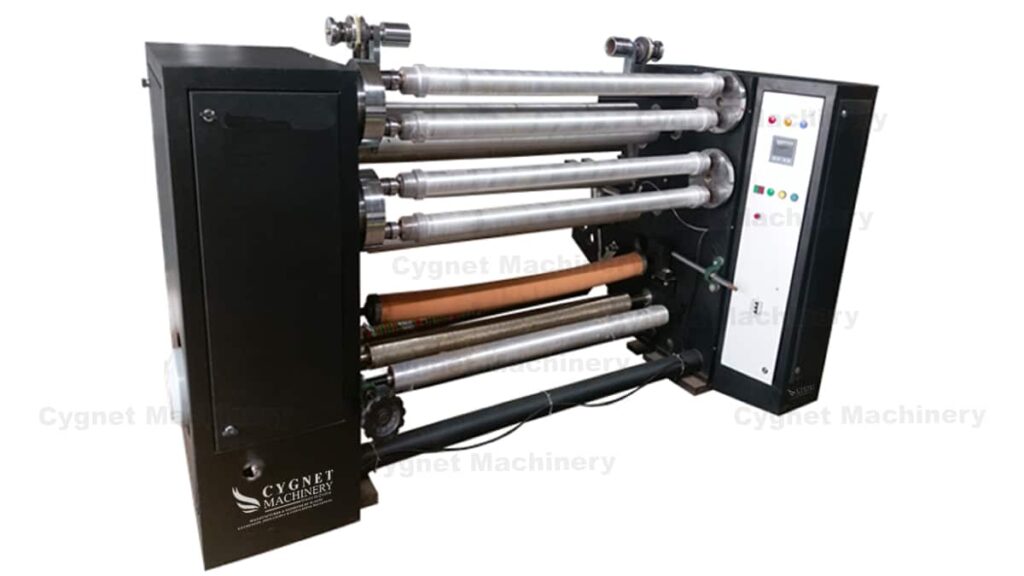
Slitting Rewinding Machine

Premium Paper Slitting Rewinding Machine Manufacturer in India | Slitter Rewinder Machine

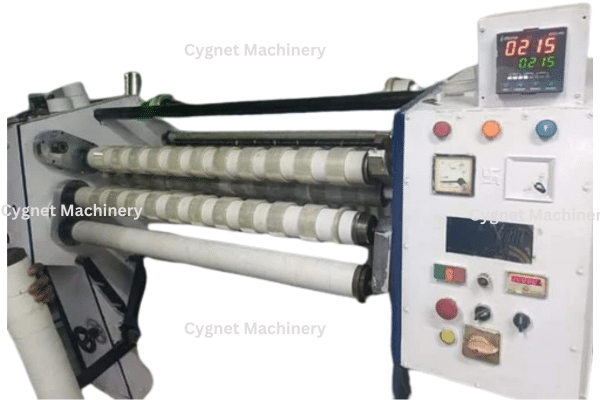
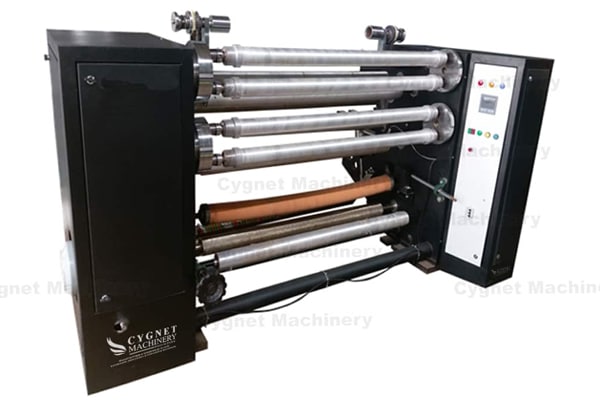
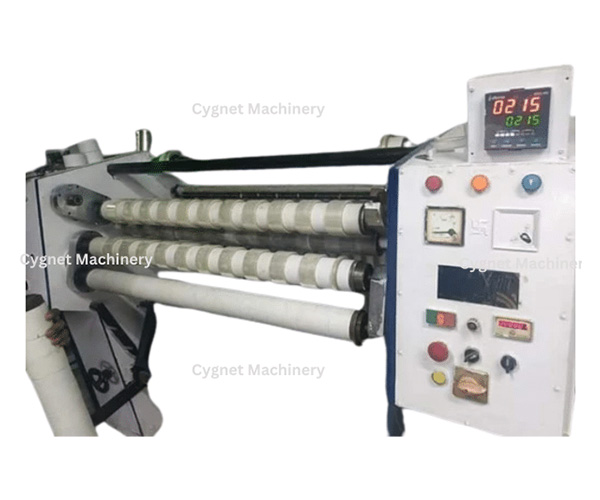
A Slitting Rewinding Machine is a very efficient converting machine which slits jumbo rolls of different materials into smaller rolls of exact slit widths and rewind the rolls onto new reels. Cygnet Machinery is one of the prominent Slitting Rewinding Machine Manufacturers in India with technologically advanced machines designed to operate at high-speed with high precision and reliability for long periods.

These machines are used in a wide range of industries including packaging, paper converting, printing, flexible packaging, labels, tapes and plastics. In modern industry, with the continuous increasing requirements of higher quality and higher productivity, it is indispensable to use modern slitting rewinding machines to produce accurate slitting, high quality rolls and reduce material wastage.

The machines can be used for processing papers, BOPP films, PET films, aluminum foil, laminated films, non-woven fabrics as well as flexible packaging materials.

Slitting Rewinding Machine

What is Slitting Rewinding Machine?

Slitting Rewinding Machine is the industrial machines to slit the wide master rolls to narrower rolls of particular widths. The machine feeds a parent roll of material, cuts the material precisely by a specially designed cutting system, and rewinds the slit material into finished rolls.

Today, slitting rewinding machines come with advanced technology like automatic tension, servo mechanisms, and PLC automation to provide top-end production quality and low downtime.

What is the working principle of a slitting rewinding machine?

Typically, the slitting and rewinding procedure consist of the following steps:

1. Unwinding

The material is fed into the machine and the jumbo roll is mounted on the unwind stand.

2. Web Tension Control

Advanced tension control systems provide uniform tension of materials throughout the process.

3. Slitting Operation

Using razor blades, shear knives or rotary knives the material is slit into narrower widths.

4. Rewinding Process

Materials are rewound onto individual cores using uniform winding tension in the slit.

5. Finished Roll Collection

The completed rolls are taken off for subsequent processing, packaging or shipment.

Types of Slitting Rewinding Machines

Paper Slitting Rewinding Machine

The Paper Slitting Rewinding Machine is specially designed to slit and rewind different grades paper with high precision and speed. The machines are used extensively to convert large paper reels to smaller rolls in the paper converting industry.

Paper Slitting Rewinding Machines can be used for:

  • Thermal Paper Rolls
  • POS Rolls
  • ATM Rolls
  • Kraft Paper Rolls
  • Coated Paper Rolls
  • Packaging Paper Rolls
  • Duplex Paper Rolls
  • Label Stock Rolls
  • Printing Paper Rolls

They operate without interruption, with top quality edges, and uniform winding of rolls, all thanks to advanced automation and precision engineering.

Key Features of Slitting Rewinding Machines

  • High-Speed Operation

The modern slitting rewinding machines can achieve high-speed operations with high accuracy and productivity.

  • Precision Slitting System

Advanced slitting mechanisms provide clean cuts, smooth edges and accurate roll widths.

  • Automatic Tension Control

Automatic tension control systems provide a constant web tension and are useful in producing better quality rolls.

  • PLC-Based Automation

Easy machine operation and parameter setting, monitoring process, PLC and HMI control systems.

  • Servo Drive Technology

Precise synchronisation and optimized machine performance with servo driven systems.

  • Heavy-Duty Construction

The machine is built to be strong and durable, ensuring it can operate for a long time in harsh industrial conditions.

  • Easy Knife Adjustment

A fast and easy positioning of the knife decreases the set-up time and helps to optimize the knife operation.

  • Minimal Material Waste

With optimum machine design, edge trim losses and material waste are reduced.

Slitting Rewinding Machines Process Materials

Our slitting rewinding machine can be used for all kinds of materials such as:

  • Paper
  • BOPP Film
  • PET Film
  • CPP Film
  • PVC Film
  • Laminated Films
  • Aluminum Foil
  • Non-Woven Fabric
  • Label Stock
  • Kraft Paper
  • Flexible Packaging Materials

In today’s converting applications, precision, efficiency, and quality roll production are only possible with a high-performance Slitting Rewinding Machine. Selecting the right Paper Slitting Rewinding machine manufacturer is essential, whether you are looking for a thermal paper machine, packaging paper machine or label stock machine, for long term productivity and profitability. Cygnet Machinery has developed cutting edge slitting and rewinding solutions to satisfy an array of industrial applications and provide superior performance, reliability and customer satisfaction.

Slitting Rewinding Machine Read More »

plastic processing machine manufacturers

Plastic Processing Machine

India's Largest Plastic Processing Machine Manufacturers — Cygnet Machinery

A Plastic Processing Machine is a core industrial equipment that is used in various plastic processing methods including extrusion, blowing, molding, converting, recycling and packaging plastic raw materials to produce quality finished products. Cygnet Machinery is one of the trusted Plastic Processing Machine Manufacturers in India that provides technologically advanced solutions that increase productivity, reduce material wastage, improve the quality of the product and enhance profitability.

With the rapid advancement of plastic processing machine, they serve as the core of modern manufacturing production, playing a vital role in the production of new and innovative plastic products that meet the needs of the industry.

Our machines are designed to satisfy changing demands in packaging, agriculture, construction, automotive, healthcare and consumer goods applications.

Today’s plastic processing machines feature automation, tight tolerances, energy-saving systems, and state-of-the-art engineering to produce accurate performance and a high-quality output.

plastic processing machine manufacturers

What is a Plastic Processing Machine?

A plastic processing machine is the equipment which is used in the industrial process for the conversion of a plastic raw material (HDPE, LDPE, LLDPE, PP, PVC, PET, biodegradable polymers and other thermoplastics) into a usable product. The machines used for producing these films, bags, sheets, pipes, containers and other plastic parts are advanced processing machines.

In manufacturing, plastic processing machines are an important part

Demand for plastics is on the rise in the world for various industries. The manufacturers need to have a reliable plastic processing machine for the following reasons:

  • High production efficiency
  • Consistent product quality
  • Reduced material wastage
  • Lower operational costs
  • Faster production cycles
  • Improved product customization
  • Enhanced sustainability initiatives

Businesses can stay competitive and provide a quality and environmental standard that is both high and acceptable thanks to advanced plastic processing machines.

Types of Plastic Processing Machines

The Biodegradable Plastic Processing Machines

Considering the environmental awareness, biodegradable plastic processing machines have become in high demand. They are designed to compost biodegradable waste like PLA, PBAT, and starch polymers, which are used in the creation of eco-friendly packaging.

Key Features

  • High Production Capacity

The advanced machines are built to run around the clock and to produce the maximum output, to support the growing market demand.

  • Energy-Efficient Operation

Modern systems reduce power consumption without compromising on performance.

  • PLC-Based Automation

Process control and accurate monitoring with integrated PLC controls, which boost operational efficiency.

  • Servo-Driven Technology

Servo motors help to achieve accurate movements, greater accuracy, and less material waste.

  • User-Friendly Interface

The touch screen control panels make the machine easy to operate and decrease training needs.

  • Robust Construction

Heavy Duty machine structures provide durability and reliability.

  • Low Maintenance Requirements

Advanced engineering and quality components minimise down time and maintenance costs.

Key Benefits

  • Improved Productivity

Automated systems greatly boost productivity while ensuring quality.

  • Reduced Material Waste

Precision engineering reduces waste of raw materials and better use of resources.

  • Enhanced Product Quality

They guarantee uniform product specifications and superior finish quality, due to consistent processing conditions.

  • Lower Operating Costs

The designs are energy efficient to minimize power consumption and production costs.

  • Increased ROI

High production efficiency and low operational costs are key factors to better profitability.

  • Scalability

Manufacturers can easily scale-up their production to cater for the future market demands.

Application of plastic processing machine

Packaging Industry
Produce films, bags, pouches and packaging.
Agriculture Industry
Manufacturing mulch films, greenhouse films, irrigation products and protective films.
Construction Industry
Producing geomembranes, protective sheets, insulation products and piping products.
Healthcare Industry
Manufacturing medical packaging, containers and disposables.
Food Processing Industry
Developing packaging solutions for food-grade applications with the highest level of hygiene.
Consumer Goods Industry
Producing domestic items, shopping bags, storage containers and other plastic products.
Plastic bag making machine in ahmedabad

The Ahmedabad’s Plastic Processing Machinery business is heralded as the most developed in India and has a well-established and comprehensive ecosystem of high-quality Engineering and Manufacturing services. The buyers for plastic bag making machine In Ahmedabad are able to choose from a range of quality, precision engineered machines that are made available by the global and the local suppliers of these machines and they are all beneficial as they are capable of high-speed manufacturing, energy savings and having a minimal material wastage. 

Ahmedabad’s leading manufacturers provide a complete range of machines, including automatic T-shirt and D-Cut Bag and specialised lines tailored for the needs of today’s biodegradable/compostable films. With local manufacturing capabilities, cutting-edge automation, and after-sales support, Ahmedabad-based machinery suppliers deliver high-performance, budget-friendly solutions to facilitate packaging businesses to grow output without compromising on quality, which must adhere to strict international standards.

Plastic Processing Machine Read More »

How To Easy Converting Machinery

How To Easy Converting Machinery

Converting Machinery Process

In many different industries, conversion machinery is essential to turning raw materials into final goods. Cutting, laminating, coating, and printing are some of the processes that use this adaptable equipment to transform rolls or sheets of material into the final form that is needed. 

Converting machinery improves manufacturing precision and efficiency for a variety of materials, including paper, plastic, textiles, and metals. Rolls or sheets of raw material are normally fed into the converting machine at the start of the process. The equipment uses coating units, printing mechanisms, or cutting blades to change the material’s properties depending on the particular use. 

For instance, converting equipment may be used in the packaging sector to cut and laminate materials to produce branded and specially sized packaging products.

A crucial component of converting machinery is precision, which guarantees that every product fulfils precise requirements. In order to maximise production yield and minimise waste, precise cutting, printing, or coating is made possible by sophisticated control systems and sensors.

Furthermore, a lot of converting equipment is built to switch between materials or product specifications quickly and smoothly, which enables producers to quickly adjust to changing production demands.

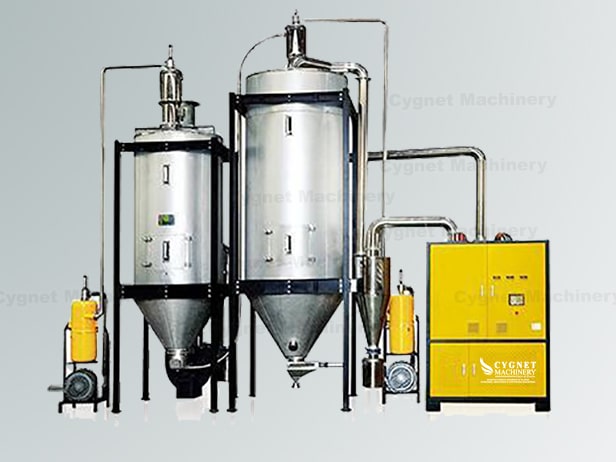
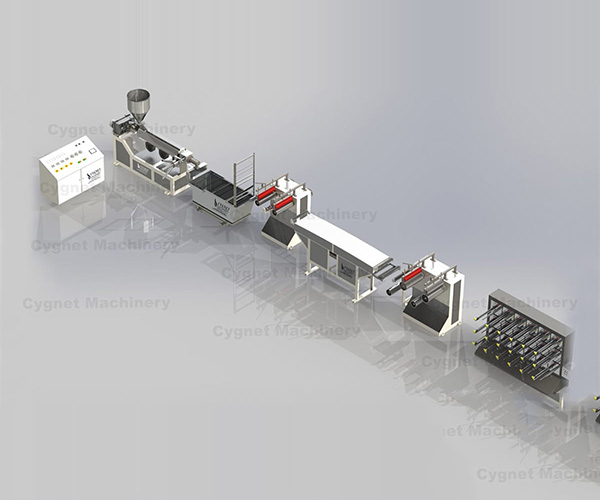
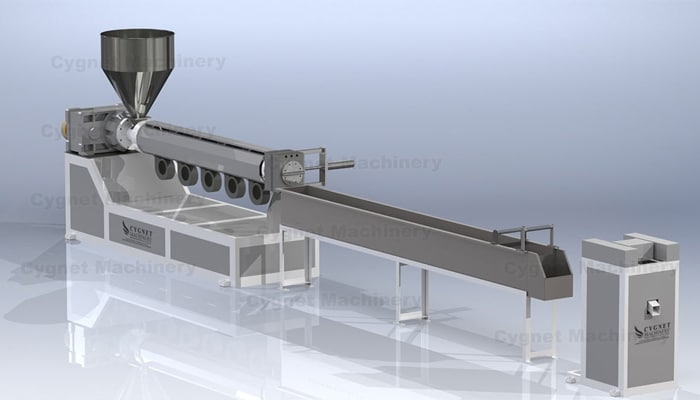
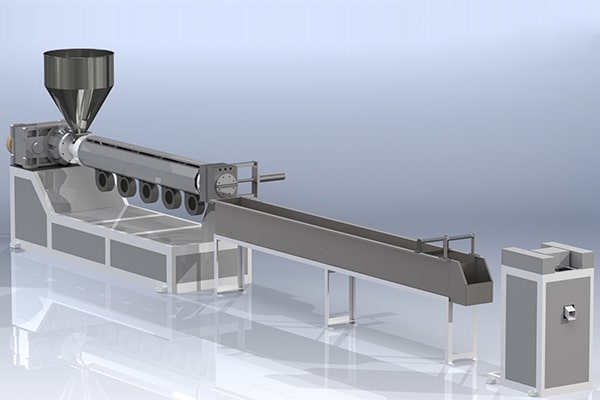
Re-Process Granules Making Machine

Converting machinery is a vital component of many industries, from textiles to packaging and labelling and beyond. This is due to its versatility. These devices keep developing as technology does, adding digital and automated features to increase productivity and decrease downtime. Converting machinery essentially acts as the backbone of many manufacturing processes, enabling the smooth transformation of raw materials into finished goods that we come into contact with on a daily basis.

How To Easy Converting Machinery Read More »

How To Easy Plastic Extrusion

How To Easy Plastic Extrusion

Procedure of Plastic Extrusion

A simple yet incredibly efficient manufacturing technique called plastic extrusion is used to make a wide range of plastic goods with standardized cross-sectional shapes.

Fundamentally, extrusion is the process of forcing molten plastic material through a die a specially made opening to create a continuous profile. This procedure is commonly used to produce pipes, tubes, and plastic sheets in the construction, automotive, and packaging industries.

Raw plastic pellets, or granules, are gathered and fed into an extruder to start the plastic extrusion process.

The plastic is heated inside the extruder to a viscous, molten state. Like toothpaste being squeezed through a tube, the molten plastic is then forced through a shaped opening in a die. The plastic assumes the intended cross-sectional shape that the die has predetermined as it comes out the other side.

The extruded plastic is often cooled quickly with air or water to preserve product consistency and quality. The plastic takes on the desired shape after cooling. Depending on how the extruded product is going to be used, it might go through additional steps like cutting or coiling.

The ability of plastic extrusion to create products with consistent cross-sections and lengths is one of its benefits.

BOPP Tape Slitting Rewinding Machine

This makes it an efficient and economical mass production method. Furthermore, extrusion’s adaptability facilitates customization, allowing producers to produce a broad range of forms and dimensions to satisfy particular industry demands. In the realm of plastic manufacturing, plastic extrusion is a crucial process that offers a cost-effective and efficient means of producing an array of commonplace items.

How To Easy Plastic Extrusion Read More »

plastic processing machine manufacturers

How To Easy Plastic Processing

How to Improve Plastic Processing Efficiency | Plastic Processing Machine Manufacturers

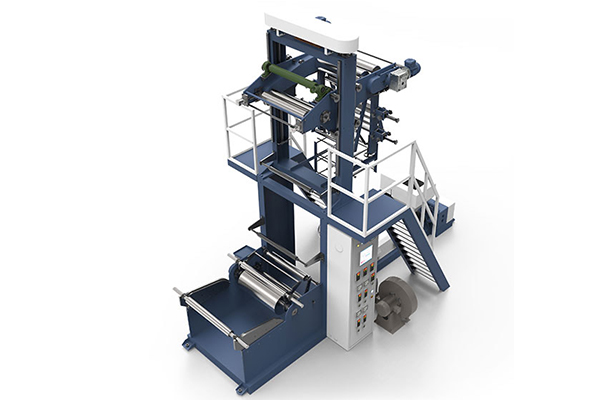
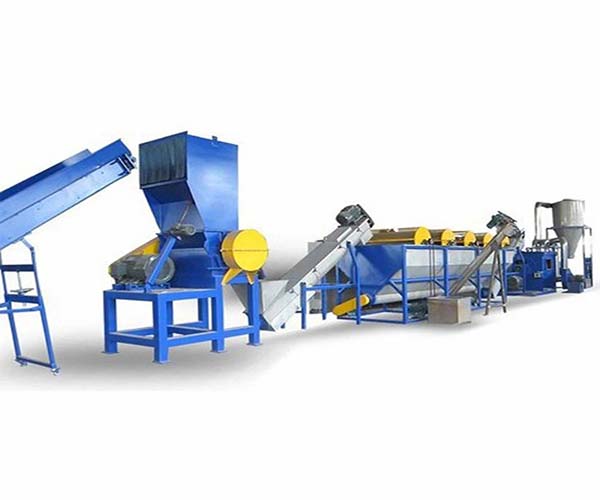
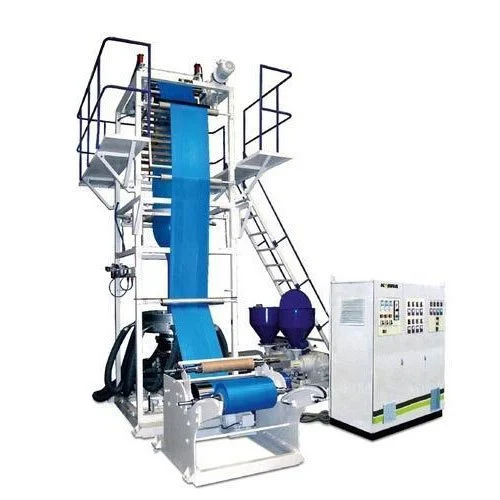
When choosing a plastic processing machine manufacturer, you need to look for a company with advanced technology, reliability and support. The modern equipment used in the plastic processing field has advantages of improving production efficiency, material utilization and product quality. Cygnet Machinery is one of the largest Plastic Processing Machine Manufacturers and specializing in innovative solutions for blown film extrusion, bag making, recycling and Plastic converting applications.

Plastic Process in Depth

The way of processing raw plastic materials into various useful products is the most important and flexible method. Typically, there are several critical steps in the process: first, the collection of raw plastic resins, followed by the process of cutting or shredding them into smaller pieces. It typically involves several key steps, including collecting raw plastic resins and then cutting or shredding them into smaller pieces. These resins may be recyclable plastics, natural gas or petroleum.

The plastic resins are collected then melted and subjected to high temperatures to make them flexible, typically through extrusion or injection molding. Using molds or dies, the plastic material is molded into the appropriate shape after the first melting stage.

This is a crucial step to produce the product that aligns with the exact requirement and specifications. Once the cooled and hardened plastic requires further processing, depending on its use, it can then be taken through various finishing processes such as cutting or polishing or assembly.

Benefit of Plastic Processing

A positive aspect of plastic processing is that it could be used in various industries like consumer goods, automotive and packaging industries. The technique can also be used to add chemicals, such as reinforcements or colorants, to enhance the end product’s qualities.

plastic processing machine manufacturers

While plastic processing has its merits of being cost-effective and easy to use, it is important to take into account the environmental impact of plastic waste. As sustainability grows in attention, the industry is keen on developments such as biodegradable polymers and better recycling processes that reduce the environmental footprint of plastic working.

The general effectiveness and environmental friendliness of plastic processing techniques are still being improved in spite of these obstacles by continuing research and technological developments.

How To Easy Plastic Processing Read More »

Scroll to Top