
Plastic films are used in packaging, agriculture, shopping bags, garbage bags and several other applications. However, not every application requires the same film structure. Some products can be made using a single layer of plastic, while others need multiple layers to achieve specific properties such as strength, flexibility or barrier protection. Understanding the difference between these production methods helps manufacturers decide which type of blown film plant suits their product range.
Cygnet Machinery manufactures plastic extrusion machinery, including monolayer and multilayer blown film plants. As a blown film plant manufacturer in Ahmedabad, the company offers machinery options for manufacturers with different film production requirements.
Understanding Single Layer Blown Film Production
Single layer, also known as monolayer blown film production, uses one extruder to process plastic material. The granules are fed into the hopper, where they are heated and melted inside the extruder. The molten plastic then passes through a die to form a tube. Air is introduced into this tube to create a bubble, which is cooled and drawn upwards before being flattened and wound into rolls.
This method is commonly used to manufacture films for carry bags, garbage bags, shopping bags, surface protection and other general-purpose applications. Materials such as LDPE and HDPE can be processed, depending on the machine configuration and the intended film.
A major advantage of monolayer production is its relatively straightforward process. Since it uses one material layer, operation and material handling can be easier to manage. It can be a practical option for manufacturers producing films with standard property requirements.
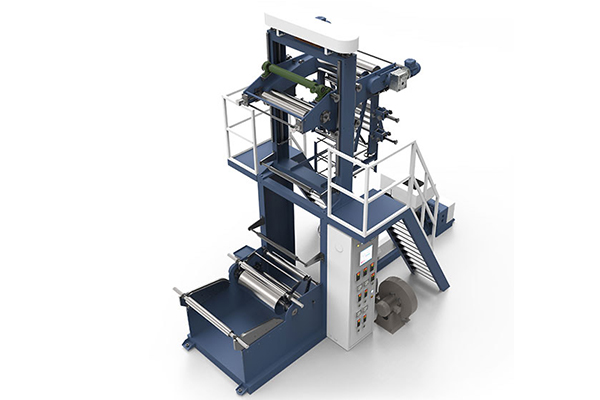
Understanding Multi Layer Blown Film Production
Multi layer blown film production combines two or more layers of molten plastic through a co-extrusion process. Each layer is supplied by a separate extruder and brought together through a specialised die to form a single film structure.
Different layers can be designed to serve different purposes. For example, one material may contribute to strength, another may improve flexibility, while a particular layer may support sealing or barrier requirements. The exact combination depends on the application and the properties expected from the finished film.
Two-layer ABA and three-layer ABC configurations are examples of multilayer blown film production. These arrangements allow manufacturers to use different material combinations within the same film. This can be useful for packaging applications where a single material may not provide all the required properties.
Key Differences Between Single and Multi Layer Production
Although both methods use the blown film extrusion process, they differ in their equipment setup, material handling and film structure.
Comparison factor | Single Layer Production | Multi Layer Production |
Film structure | One material layer | Two or more combined layers |
Extrusion setup | Generally one extruder | Multiple extruders |
Material combination | One material or blend | Different materials can be used in separate layers |
Process complexity | Relatively straightforward | Requires coordination between extruders and layer distribution |
Film properties | Depends on the processed material | Can combine different properties across layers |
Typical applications | Carry bags, garbage bags and general-purpose films | Packaging films requiring specific combinations of properties |
The main difference is not simply the number of layers. It is the ability of multilayer production to combine materials with different characteristics in one film.
Factors to Consider Before Choosing a Production Method
The intended application should be the starting point when deciding between single and multilayer production. Manufacturers producing standard carry bags may find a monolayer plant sufficient, while applications requiring a combination of material properties may benefit from co-extrusion.
Other considerations include:
- Film specifications: Required thickness, width, strength, flexibility and sealing properties.
- Raw materials: Availability, cost and compatibility of the polymers used.
- Production volume: Expected output and the number of product variations.
- Operating requirements: Available space, power, operator skills and maintenance needs.
- Investment: Initial machinery cost and the ongoing cost of materials and operation.
A blown film plant manufacturer in ahmedabad can help manufacturers understand available machine configurations based on their intended products and production plans.
Making the Right Choice for Film Manufacturing
Single layer and multilayer blown film production serve different manufacturing needs. Monolayer systems offer a simpler setup for standard film applications, while multilayer systems provide greater flexibility when different material properties are needed in one film. The decision should depend on product specifications, raw material choices, production volume and investment plans.
Cygnet Machinery offers monolayer and multilayer blown film plant options, including two-layer and three-layer configurations. Manufacturers looking for a blown film plant manufacturer in Ahmedabad can discuss their application and production requirements with the company to identify a suitable machine configuration.
FAQs
Single layer production uses one extruded layer, whereas multilayer production combines two or more layers through co-extrusion. Each layer in a multilayer film can provide different properties.
Common materials include LDPE and HDPE. Other polymers and biodegradable blends may also be used, depending on the machine configuration and the intended film application.
The choice depends on the packaging requirements. Monolayer film may be sufficient for standard applications, while multilayer film can be considered when the product needs a combination of properties such as strength, flexibility and sealing performance.